
What Sanpete County Property Tax Records Separate
Valuation and billing live in separate Sanpete County property tax records. The Assessor keeps the parcel card, the owner-of-record field, land and improvement values, and exemption details. The Treasurer keeps the bill itself, along with balances, delinquencies, payment options, and tax-sale material. Both offices matter, but the assessed value is not the amount due. Start a parcel lookup with the address or parcel number. Then carry that identifier straight to the Treasurer portal.
Assessed value is the Assessor’s valuation for the tax roll; taxable value reflects applicable tax treatment; the tax bill is the Treasurer’s amount due for a tax year.
| Record | Custodian | What it answers |
|---|---|---|
| Parcel card and value | Assessor | Which parcel, owner field, assessed and taxable figures |
| Exemption and tax basis | Assessor | How qualifying treatment affects taxable value |
| Current bill and balance | Treasurer | Tax year, amount due, payment, or delinquency |
| Five-year sale notice | Treasurer and Clerk | Published delinquent-property sale and application information |
One caution appears in the Treasurer portal itself. Taxable values serve assessment purposes, the portal warns, and may not reflect current market value. Treat each figure according to its office and date.
Find a Sanpete County Property Tax Bill by Parcel
The Treasurer runs a separate EagleWeb tax lookup with an online payment screen. Search controls there may require JavaScript and cookies. Not every dynamic field label appears in the accessible page text. Take the address or parcel reference from the Assessor result first. Confirm the tax year and account before paying. If a search will not load, call the Treasurer contact the county lists. Guessing at a payment account is never worth the risk.
- Find the parcel in Assessor Account Search and copy its parcel or serial number.
- Open the Treasurer tax portal and search for the matching parcel or property account.
- Confirm the situs, tax year, balance, and payment status in the result.
- Check prior-year or delinquency details if the portal displays them.
- Contact the Treasurer about an unclear balance, redemption amount, or payment posting.
Both offices sit at 160 North Main in Manti. The Treasurer occupies Suite 206 and answers at 435-835-2101. The Assessor is in Suite 303 at 435-835-2111.
Sanpete County Property Tax Records: Assessment and Taxable Value
Utah assesses qualifying residential property at 55 percent of fair market value. This is the standard residential exemption. That ratio is a tax rule, plain and simple. The county is not promising a sale price. Primary-residence status, agricultural land, and greenbelt treatment can all shift the taxable basis. Land and improvements may carry separate values. Each tax notice reports an assessor estimate tied to one tax year. A last-sale amount is something different. It is a transaction datum from a recorded deed or transfer record. That figure appears only when it is disclosed at all. The assessment date can differ from a closing date. A family transfer may not be an open-market sale. A deed may state only nominal consideration. Parcel changes can also make compared figures describe different land. The Sanpete property-value guide explains how to read each number. Do not mistake the bill for a market appraisal.
The county Board of Equalization page shows how the Notice of Property Valuation and Tax Changes connects to the local appeal route.
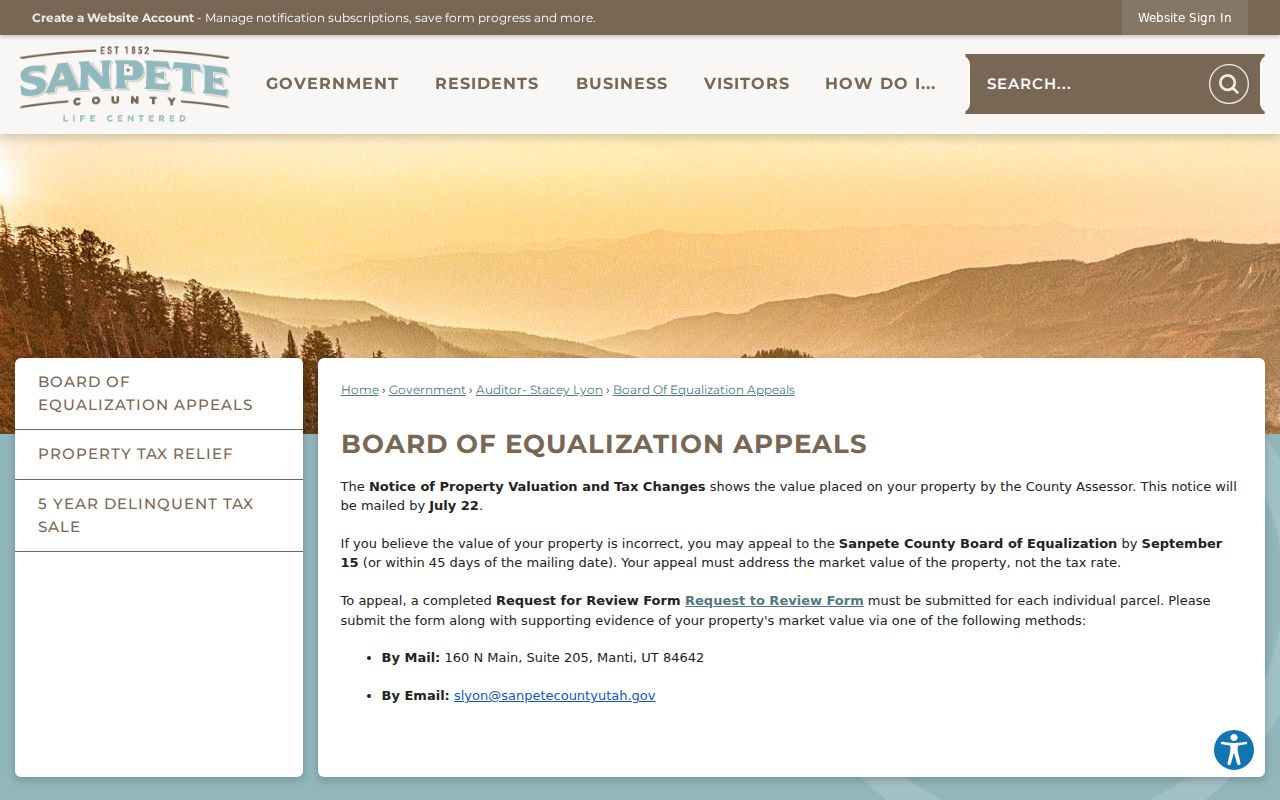
Read that page alongside the notice for the parcel and tax year in question. Check the posted local deadline against the notice itself.
Appeal a Sanpete Assessment Within the Local Window
An appeal may be filed by September 15. It may also be filed within 45 days of the mailing date on the valuation notice, according to the county appeal page. Keep that notice and its mailing date. The alternative window depends on it. The county page is the local source for the deadline. Utah Tax Commission instructions describe the next appeal level. State an opinion of market value and attach evidence tied to the parcel. Comparable sales, photos, and repair records all help. A survey or plat showing size or access helps too. Proof of wrong land or improvement characteristics also counts. Save the parcel number, value year, notice, evidence, and a copy of the submission. Remember the appeal concerns assessed value for taxation. It cannot revise a deed or settle a boundary.
Deadline check. Use the date printed on the current notice and confirm the filing route with Sanpete County. Do not carry last year’s deadline forward without checking the current notice.
Sanpete County Property Tax Records and the Five-Year Sale
The county publishes a five-year delinquent tax-sale page. Land delinquent for five years may be sold through the county process. A posted sale list does not prove a parcel has changed owners. A listed amount is not market value. Check the Treasurer for tax and redemption status first. Then check the Recorder for a tax deed or later conveyance. Redemption requires delinquent tax, interest, penalties, and administrative costs. Ask the Treasurer to confirm the current parcel balance before relying on a web notice. The Clerk handles related county applications and records, while the Treasurer maintains payment information. A tax sale certificate, notice, or delinquency entry is not the same as a recorded tax deed. That deed conveys land. If a parcel appears on a sale notice, write down the notice date, APN, and tax years involved. Also record the office contact. Ask the Treasurer for the current redemption amount and any deadlines for that parcel. An old web capture cannot establish today's balance. After a payment or redemption, keep the receipt. Then check whether the public tax account and recorded land documents reflect the event. A purchaser researching a prior tax sale should read both the sale record and any later deed. The list alone is not proof of present ownership.
The county five-year delinquent tax-sale page sets out the county’s published sale information.
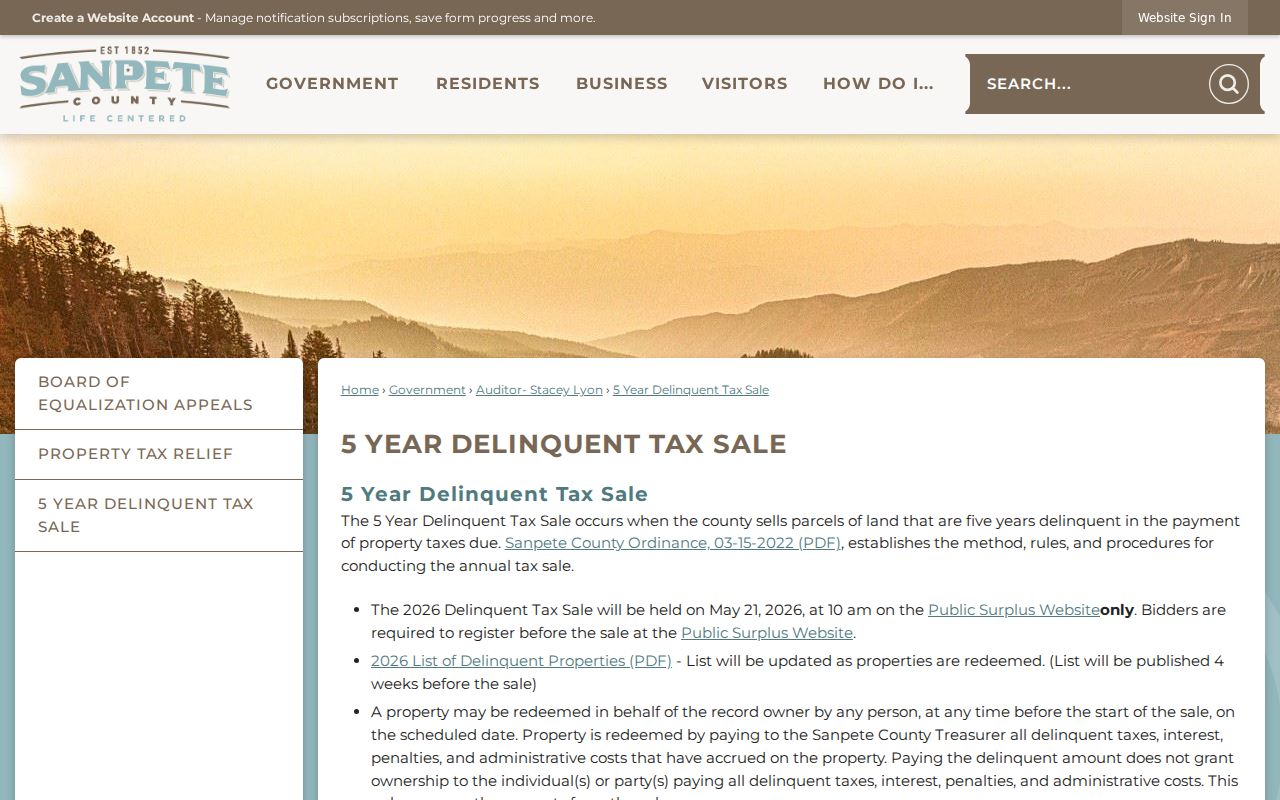
Note: Confirm redemption and payment details with the Treasurer for the specific parcel before relying on any notice.
Sanpete County Property Tax Records: Exemptions and Greenbelt
Exemptions drive a wedge between the taxable figure and the Assessor's full-value estimate. Primary-residence treatment is one factor. Agricultural greenbelt treatment is another. Either can shift the tax basis in Sanpete County. A rural setting, a mailing address, or an owner name proves nothing about eligibility. The Assessor holds the parcel card. That office can explain exactly what exemption sits on it.
Before a purchase or a family transfer, pull the numbers apart. Separate land value, improvement value, any exemption, and taxable value. Pin each figure to its tax year. A parcel boundary or use can change after the last sale. Remember that the tax bill shows one year's charge. It is neither an appraisal nor a full statement of recorded liens.
Move from the Tax Roll to the Recorded Instrument
A tax account names the owner carried for assessment and mailing. That entry can lag behind the Recorder's books. A deed may be recorded before the Assessor card catches up. So search the parcel in the Recorder index. Check the latest grantor, grantee, recording date, and legal description. A mortgage or lien sitting in the index can encumber the parcel. It cannot change who owns it.
The county's parcel-linked online deed index starts March 8, 1988. Older transfers may live in the Recorder books, on microfilm, or in archive finding aids. When the tax roll and a deed result conflict, save both dates. Then ask the Recorder or Assessor which record each field actually represents.
Request Sanpete County Property Tax Records
When an online result will not load, go to the office that keeps the record. A focused request should carry the parcel number. It should also carry the tax year, the bill or payment history wanted, delinquency or redemption status, and a preferred copy format. Ask for an estimate before ordering any extraordinary compilation. Under Utah GRAMA, the request goes to the record-holding entity. It must identify the requester, and should describe the record with reasonable specificity.
Keep your payment confirmation and the tax-year record. Ownership questions belong with the Recorder deed. Assessed-value questions belong with the Assessor notice and its appeal path. Keeping them separate keeps a payment record from being mistaken for a title document.
For a valuation dispute, set the parcel card beside the Notice of Property Valuation and Tax Changes for that year. Note the date the notice was mailed. The county's local appeal period runs to September 15 or 45 days from mailing. A supporting packet should identify the parcel and explain the disputed characteristic or comparable sale. Contact the Assessor for parcel and valuation facts. Then follow the Board of Equalization filing instructions. A call about a bill never files an appeal by itself.
Limits of Sanpete County Property Tax Records
Sanpete County tax records are snapshots, not permanent truths. A balance moves, an exemption can shift the taxable amount, and an appeal can reset a valuation without touching the recorded owner. Always verify the tax year and parcel account before paying or relying on any figure. Sale value, recorded consideration, survey lines, and title status each have their own record, so consult the one built for that question.
Use the right record. A tax value is an assessment figure. It is not a sale appraisal. Confirm the account with the Treasurer and the assessment with the Assessor before deciding anything on their strength.