
Sanpete County Former Owners: Build the Chain Backward
Work from the current parcel back through recorded grantor and grantee names. Skip the surname-only shortcut. Sanpete's parcel-linked Recorder index starts March 8, 1988. The portal is a catalog, not a title report. Match every earlier deed to its legal description and recording date. When a subdivision or split changes the description, record that change before following the chain again.
Grantor: a party conveying an interest. Grantee: the party receiving it. A former-owner chain follows prior grantees and checks each deed against the land description.
| Transfer date | Grantor → grantee | Deed type | Book, page, or document number |
|---|---|---|---|
| Copy from newest matching deed | Transcribe parties as indexed | Read the instrument | Save the locator shown |
| Copy from prior acquisition | Search prior grantor as grantee | Compare deed and legal description | Save the earlier locator |
| Continue by date and land description | Check spelling and entity forms | Separate conveyances from liens | Note the source volume or file |
Treat this table as a worksheet rather than a sample Sanpete County chain of title. Enter only the parties and dates visible in the recorded instrument itself, so your property records research stays accurate.
Sanpete County Former Owners in the Grantor-Grantee Index
Find the parcel's newest recorded conveyance. Read the grantee and grantor, then search that grantor as grantee in an earlier time range. Repeat with each prior deed. The public portal has no dedicated reverse-chain control. Use its ordinary party and parcel searches, plus the search help, and confirm each legal description still matches the parcel.
- Begin with the current parcel number and owner shown on the Assessor tax roll.
- Search the owner as grantee and select the newest matching deed.
- Record the date, parties, instrument number, deed type, and legal description.
- Search the grantor as grantee and find that party’s earlier acquisition.
- Repeat until the parcel splits, the description no longer matches, or the online index ends.
Names in the index rarely sit still. Search spelling variants, initials, spouse names, trusts, LLC punctuation, estates, and fiduciaries. A mortgage between two deeds does not create another owner. An assignment merely changes a lender or beneficiary. A reconveyance releases an interest; neither one transfers the fee.
The Sanpete Public Web Limited Viewer is the online index starting point.
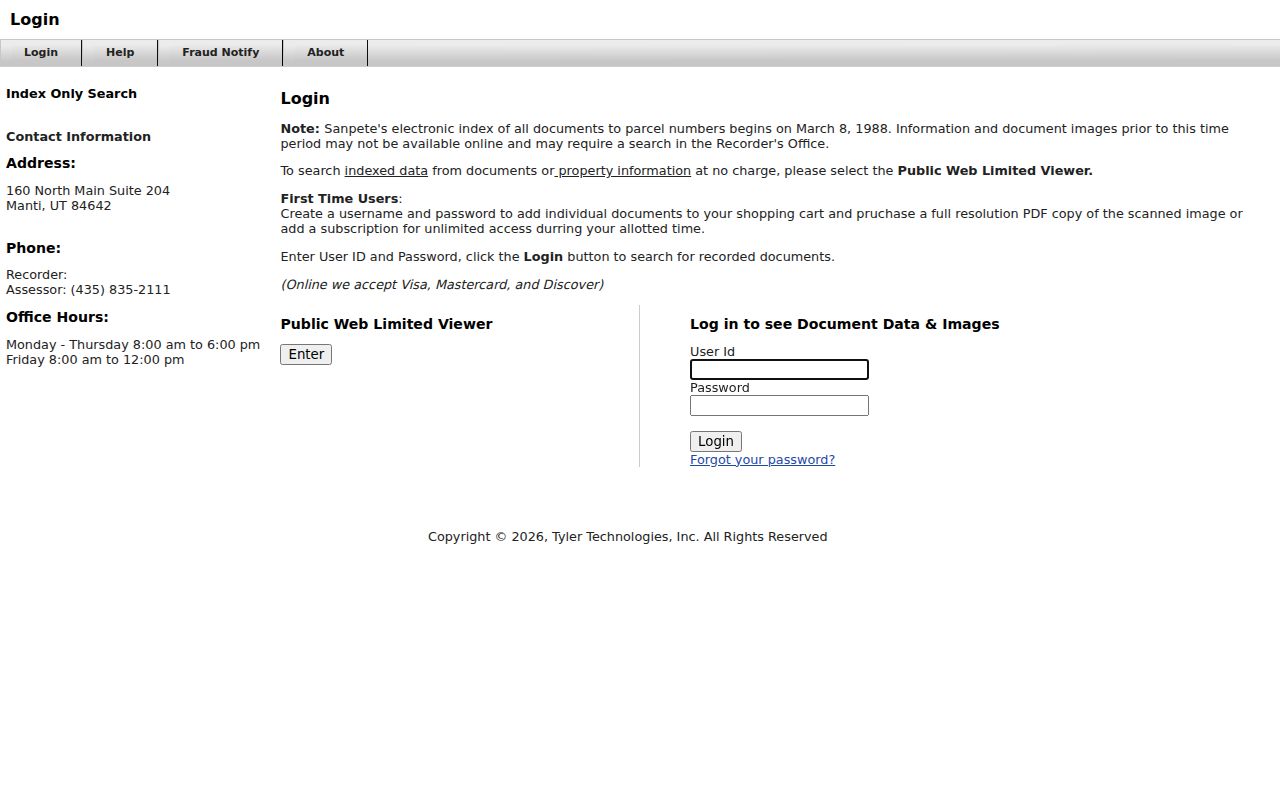
The landing page separates limited search from account access. Account holders get expanded document data and scanned images.
How Far Back Sanpete County Former Owner Records Go
The parcel-linked electronic index begins March 8, 1988. That cutoff is digital, not historical. Older ownership still survives in county and territorial-era records that may never appear in the online search, and the cutoff says nothing about the age of Sanpete land records.
Before March 8, 1988. Ask about Recorder deed books, grantor and grantee indexes, microfilm, vault material, and State Archives finding aids. The online boundary is not the end of the historical chain.
The State Archives series inventory catalogs Sanpete record groups in detail. Deed records and general filing indexes lead the list. So do land patents, official records, plats, subdivision maps, tax-sale records, and probate indexes, among other groups. FamilySearch holds a Utah State Archives collection covering 1848–2001, though access and county coverage vary by record. BYU also describes Sanpete deeds from 1871–1913. Locate the reference first. Then ask the custodian for the underlying record.
Start pre-index work from the oldest known legal description. Add the latest deed party names, and ask which volume or finding aid covers that period. A catalog entry is a locator, not the deed. Online collections can carry gaps or access restrictions. When a parcel has been split, find the parent tract's plat or subdivision map before treating an earlier deed as a direct conveyance of the modern lot. That keeps the chain continuous without pretending a partial run of deeds proves marketable title.
Sanpete County Former Owners on the Manti Plat
A Manti plat map from 1891 sits in the digital State Archives collection. Its margin carries a city ordinance recognizing the plat. City Recorder William Blain wrote the ordinance. County Recorder W. D. Candland noted the map was filed with county offices. The pairing shows how a municipal action became part of the county's land-record trail.
Street addresses can shift or arrive late. For an older lot, the better link to prior owners is the recorded legal description matched to the plat name, block, and lot. Historical maps offer context, not boundary proof.
The State Archives digital Sanpete collection contains selected maps and indexes.
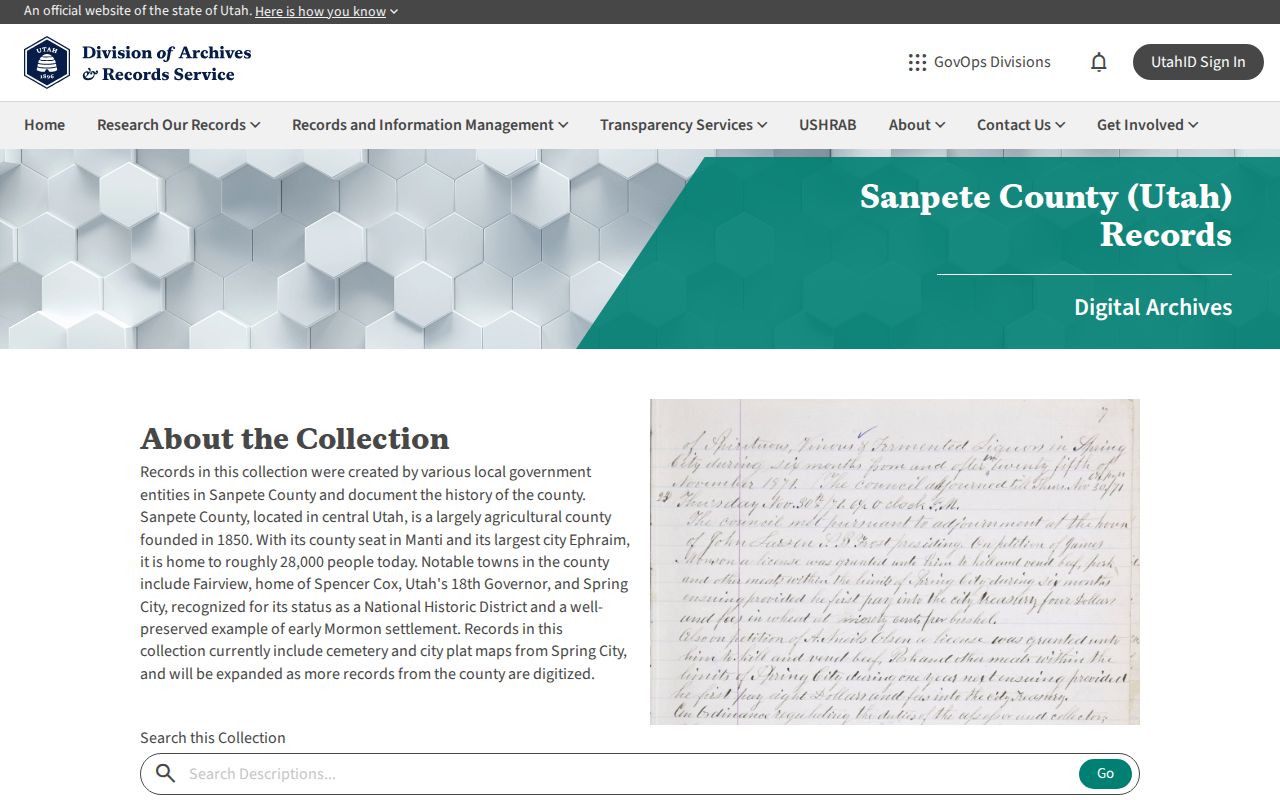
Follow a map citation into the relevant Recorder volume when the legal chain matters.
Sanpete County Former Owners, Probate, and Parcel Splits
A prior owner may have died. Or the owner conveyed through an estate. Or the land was placed in a trust. Probate explains a lot. A petition, order, or inventory can document an authorized transfer. A personal-representative deed may also surface in the recorded chain. Search the decedent, the estate, the representative, and the trustee. Search entity forms too. Compare the deed against the court file. Sealed or protected material may stay out of public view.
Utah Courts Xchange public case search is one route to a Sixth District probate docket. It also covers related case information.
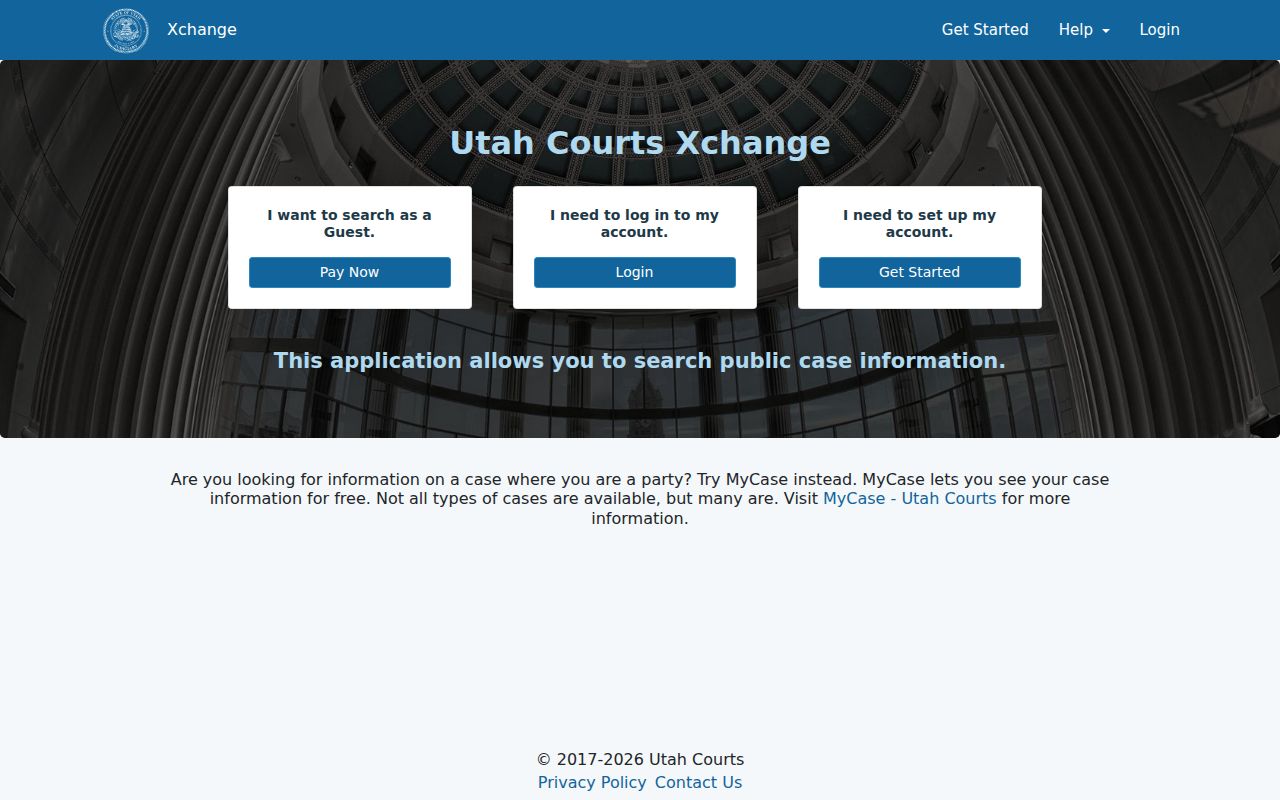
The portal is not a full document-image archive. When you need more, request a docket or certified copy from the court clerk. A parcel split breaks the chain too. An earlier deed may cover a parent tract, while the present parcel carries a new APN and a shorter legal description. Trace the connecting plat or subdivision map. It links the former tract to the present lot, so keep the connection as a note rather than reading two parcel numbers as an automatic mismatch.
Sanpete County Former Owners versus Other Recorded Parties
Not every name in Sanpete County property records belonged to an owner. A mortgage lists a borrower and a lender. An assignment shifts the secured interest to someone else. An easement names the parties to a land-use right, while a lien records a claim against the parcel. Probate orders are tricky too. One can authorize a sale without conveying anything. Read each instrument and its legal description before you add a name to the ownership timeline.
Deed type matters as well. Every Sanpete County conveyance should be labeled warranty, quitclaim, trustee, personal-representative, or another form. A quitclaim passes only what the grantor actually held, with no promise that the grantor owned the full parcel. Trust the recorded image and its related releases, not a short index label.
Request Earlier Sanpete County Former Owner Deed Records
When you contact the Recorder, bring the APN, the current and former owner names, the probable year, the document type, the legal description, and a book/page or instrument number if you have one. Ask in the same message whether you will need an office appointment, a staff search, an account purchase, a copy charge, a mailing fee, or a certification fee. Certified copies are available for a fee. The public webpage does not list a complete copy schedule. Visit the office at 160 North Main, Suite 204, Manti, UT 84642, or call 435-835-2181 extension 3.
A GRAMA request goes to the custodian who keeps the record, with a reasonably specific description of what you want. Ask for an estimate before any extraordinary compilation begins. The Sanpete deed-records guide explains individual copies and instrument types, while this page traces the earlier ownership chain.
Limits of a Sanpete County Former-Owner Timeline
A backward deed chain is a research aid. It is not a guaranteed title search. The chain can miss unrecorded interests, protected records, or volumes that were never digitized. A name on a deed does not prove the person lived on the property. A court notice does not always reveal the final outcome. Cite the document date and locator at every ownership step.
Confirm the land, not just the name. Match each transfer to the parcel's legal description. Check for later corrective instruments. Get title advice when a transaction depends on the result. For the current Assessor name and the newest deed check, see the Sanpete current-owner record guide.